
The History of
Reynolds Tavern & 1747Pub
1747
William Reynolds
The Beaver and Lac’d Hat
Tavern • Lodging • Bank • Library
A Tavern Begins on Church Circle
William Reynolds, hatter and dry goods salesman, leased the glebe land adjacent to Franklin Street and Church Circle from St. Anne’s Church in 1747. He constructed the tavern from which he conducted his hat business, rented rooms, and operated an “ordinary” (a.k.a. tavern) which served hot and cold food and liquor to visitors.
The Beaver and Lac’d Hat, as the Tavern was known, provided a meeting place for farmers, gentlemen, merchants, and soldiers.
Here one could eat, drink, leave messages, buy theater tickets, conduct business and trade, stable horses, and have a game of cards, chess, or backgammon.


A House of Welcome in an Active Port Town
In colonial Annapolis, taverns were social infrastructure, and Reynolds Tavern was no exception. Farmers, merchants, gentlemen, soldiers, and travelers came here not only to eat and drink, but to meet, converse, and keep pace with the life of the town. Messages could be left here, theater tickets could be purchased here, and horses could be stabled nearby. In an era before modern communications, places like Reynolds Tavern helped hold public life together.
The tavern also played a civic role. The Corporation of the City of Annapolis and the Mayor’s Court met here regularly, placing the building within the working political and municipal life of the city. That dual identity, as both tavern and civic gathering place, is one of the most important features of Reynolds Tavern’s history.
Mary Reynolds and the Family That Sustained the Tavern
The story of Reynolds Tavern did not end with its founder. When William Reynolds died in 1777, management of the property passed to his third wife, Mary Reynolds. She continued the tavern’s operation and maintained its role within Annapolis life. After Mary’s death in 1785, the property passed to the next generation, extending the Reynolds family’s stewardship into another chapter.
This continuity is an important part of the tavern’s legacy. Reynolds Tavern was not simply an old building with a famous date attached to it. It was a working household enterprise, sustained through management, discipline, and care. The endurance of the property owes as much to those who kept it operating as it does to the brick and timber that still stand today.


Georgian Form and Annapolis Craftsmanship
Reynolds Tavern remains one of Annapolis’s distinguished Georgian buildings. The structure, erected in 1747, is a two-and-a-half-story brick building with a gambrel roof and a carefully proportioned façade that reflects the architectural discipline of the mid-eighteenth century. Its exterior composition speaks to both craftsmanship and status, marking the building as a substantial and deliberate work rather than a modest roadside inn.
Its brickwork is especially notable. The main façade is laid in an all-header bond pattern, while areas below the watertable shift to English bond. A belt course adds rhythm and visual order to the elevation. These are not minor technicalities. They reveal the level of expense, planning, and skill invested in the building from the outset, and they help explain why Reynolds Tavern remains architecturally significant today.
The History Inside Reynolds Tavern
Part of Reynolds Tavern’s power lies in what still survives inside the building. Historic stair elements, flooring, fireplaces, plasterwork, and trim preserve a direct connection to the eighteenth century. Rather than relying on decorative nostalgia, the building offers genuine material continuity—evidence that the structure has been lived in, adapted, and preserved across generations without losing its essential character.
Later refinements became part of that story as well. The page history connects early nineteenth-century porch and transom work to cabinetmaker John Shaw, and it notes other alterations that were incorporated into the life of the building rather than imposed in ways that erased it. Reynolds Tavern is compelling not because it remained frozen in time, but because successive layers of use still allow the original structure to be read and experienced.

From Tavern to Bank to Library, and Back Again
Like many historic buildings, Reynolds Tavern did not remain unchanged. After its early tavern years and family stewardship, ownership passed beyond the Reynolds family. In the early nineteenth century, the property entered a banking era under the Farmers Bank of Maryland. Later, additional alterations and uses reflected the changing needs of Annapolis, including a rear wing added in the early twentieth century.
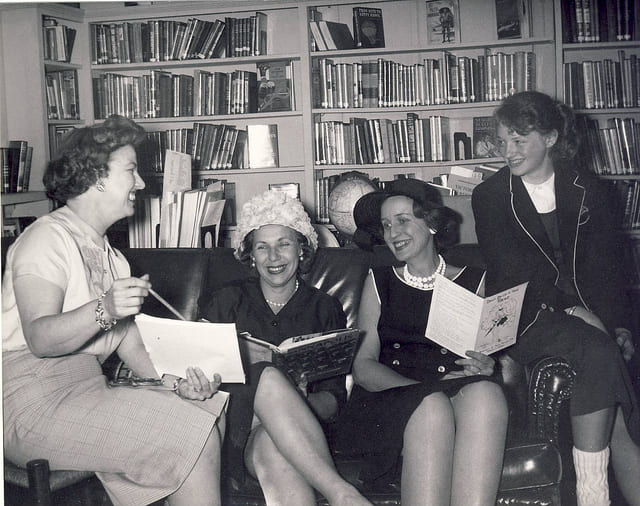
The building faced one of its greatest threats in 1935, when demolition was proposed to make way for a gas station. Instead, it was saved and adapted for a new public purpose as the Annapolis Public Library. For nearly four decades, the building served as a repository of knowledge before preservation efforts helped return it toward its original identity. Later stewardship, restoration, and renewed hospitality use carried Reynolds Tavern into its current era.
What makes this story remarkable is not simply that the building survived. It is that Reynolds Tavern repeatedly found new life without losing the historic presence that made it worth saving. Its history is one of adaptive reuse, civic value, and continuity through change.
Reynolds Tavern & 1747 Pub Today
What makes Reynolds Tavern exceptional is not only its age, but its continuity. Few places can claim such a long and varied history while remaining so closely tied to their original purpose. Here, hospitality is not a recent marketing idea layered onto an old structure. It is the through-line of the building itself. Across its many chapters, as tavern, lodging house, bank, library, and restored gathering place, the building has remained part of the civic and social life of Annapolis. To step inside Reynolds Tavern today is to enter a place where history is not abstract. It is present in the proportions of the rooms, the surviving fabric of the building, and the continuity of welcome that has defined the site since the eighteenth century. Reynolds Tavern endures because it continues to do what it was built to do: receive guests.
Experience Reynolds Tavern & 1747 Pub
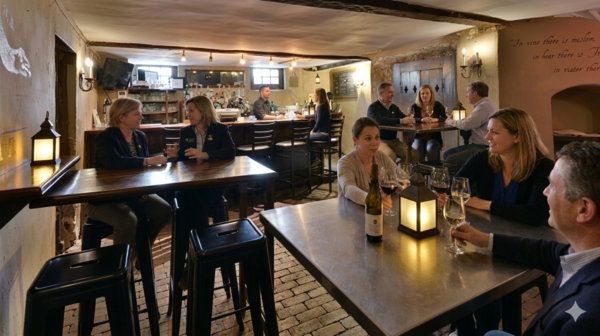
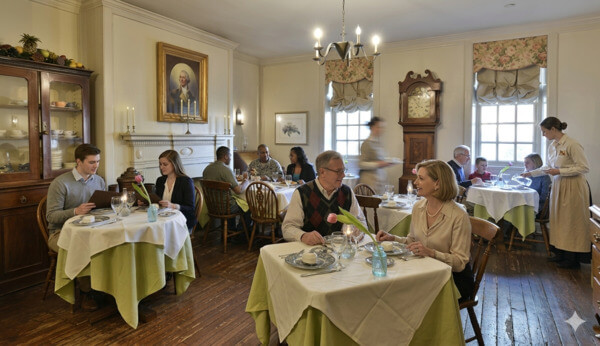
That story continues in the spaces guests enjoy today. Fine Dining, Afternoon Tea, the 1747 Pub, and overnight accommodations allow visitors to experience Reynolds Tavern not as a museum piece, but as a living part of Annapolis. The building remains rooted in its past while continuing to serve the city and its guests in the present.